Description
About Glow
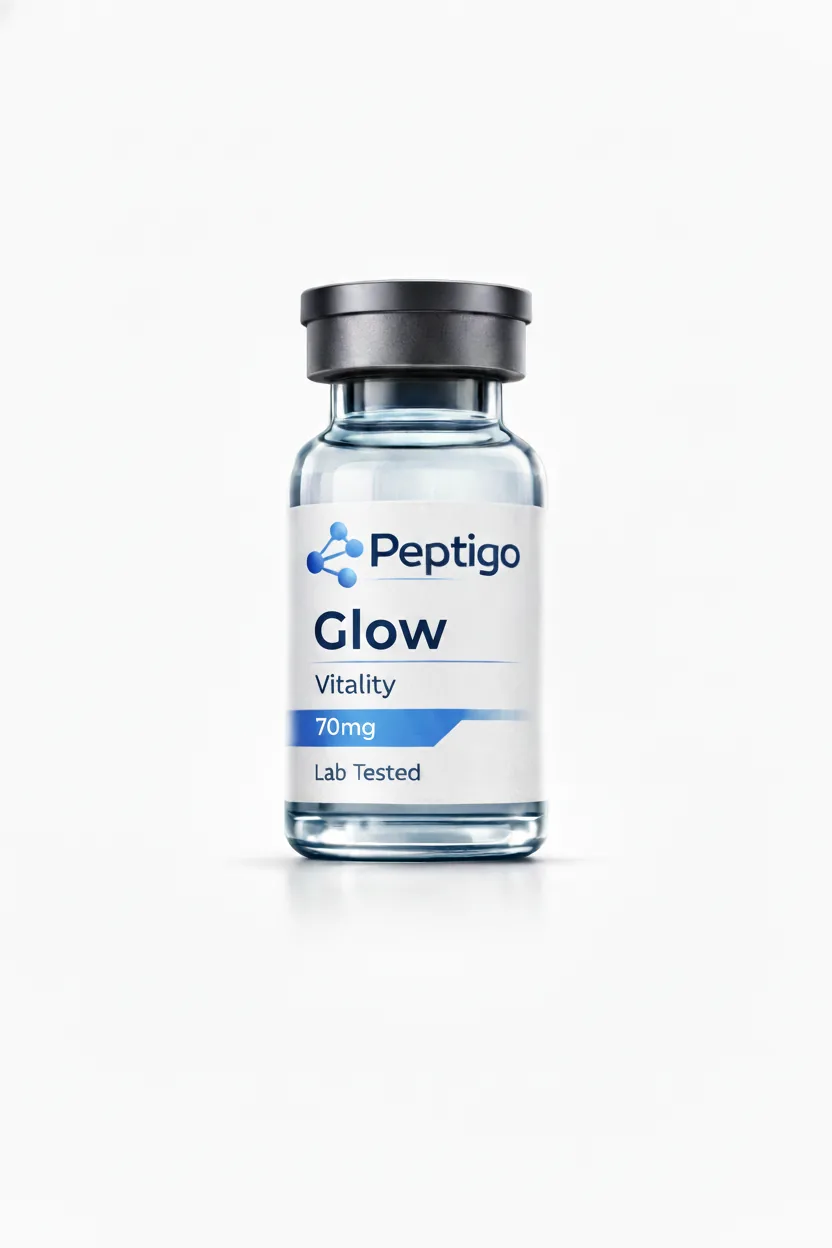
Glow is a three-peptide research blend studied in dermal, extracellular matrix (ECM), and aesthetic research contexts. Each component contributes a distinct angle to the skin and connective tissue literature.
BPC-157 — Microvascular Angle
BPC-157, best known for gut and tendon research, also appears in studies on dermal wound closure and microvascular recovery in animal models. The angiogenic signal is the throughline between its musculoskeletal and dermal research applications (Sikiric P et al., World J Gastroenterol, 2020).
TB-500 — Endothelial Migration
TB-500 (the Thymosin Beta-4 actin-binding fragment) is widely studied in endothelial cell research. Goldstein AL’s lab (Trends in Cell Biology, 2005) characterized TB-500 as an inducer of endothelial cell migration and capillary tube formation in Matrigel assays — a key step in dermal repair and neovascularization research models.
GHK-Cu — Dermal and Collagen Focus
GHK-Cu is the peptide most extensively studied for skin applications. Dr. Loren Pickart discovered it in 1973 after observing that old human plasma lost its ability to support certain regenerative processes unless GHK-Cu was re-added. In dermal fibroblast cultures, GHK-Cu has been examined for collagen I and III synthesis, glycosaminoglycan production, and elastin pathway activity (Pickart L & Margolina A, Biomed Res Int, 2018). Endogenous plasma levels are documented to drop from ~200 ng/mL at age 20 to ~80 ng/mL by age 60.
Why the Combination for Skin & ECM Research
Research literature studies these three together because they target different but overlapping layers of dermal repair in preclinical (animal and in vitro) models: BPC-157 on microvascular integrity, TB-500 on endothelial migration, GHK-Cu on matrix protein synthesis. The combined framework appears in animal models of full-thickness skin wounds.
Specifications
- Total: 70mg blend
- Purity: ≥99% each peptide by HPLC
- Format: Lyophilized powder, pre-mixed ratio
- COA: Included with every order
- Storage: 2-8°C refrigerated after reconstitution
Sold strictly for laboratory and research use only. Not for human consumption, medical, veterinary, or in vivo applications.
Frequently Asked Questions
Is this product legal to purchase in Canada for research use?
Peptigo supplies all products strictly for laboratory and in vitro research use. The compound is not a drug, supplement, or cosmetic, and is not sold for human or veterinary use. Researchers purchasing for their own laboratory work, university research programs, or independent in vitro protocols are the intended customer base. Health Canada’s April 2026 advisory specifically addresses unauthorized injectable peptide use; the research-use framing of this product is independent of that consumer-use category.
How is purity verified, and where can I see the Certificate of Analysis?
Every batch is tested independently by Janoshik Analytical, an accredited third-party laboratory. The standard testing panel includes HPLC-UV purity verification, LC-MS identity confirmation, LAL bacterial endotoxin quantification, and USP sterility testing. The Certificate of Analysis for each batch is available on the product page after purchase, and the testing methodology is detailed on the Lab Testing reference page.
What is the standard reconstitution and storage protocol for laboratory use?
The compound is supplied as a lyophilized powder. The standard diluent for reconstitution in research protocols is bacteriostatic water (0.9% benzyl alcohol). The Peptigo reconstitution calculator handles the volume-and-concentration arithmetic for a given target research dose. Unopened lyophilized peptide is stable at room temperature for up to 30 days during transit and should be refrigerated at 2-8°C for long-term storage. Reconstituted peptide should be refrigerated at 2-8°C and is typically functional for 4-6 weeks; protect from light.


Reviews
There are no reviews yet.