Research Use Only · Not for Human Consumption 30% OFF EVERYTHING · limited time · Free Shipping on $250+ · View Lab Reports

• Vitality

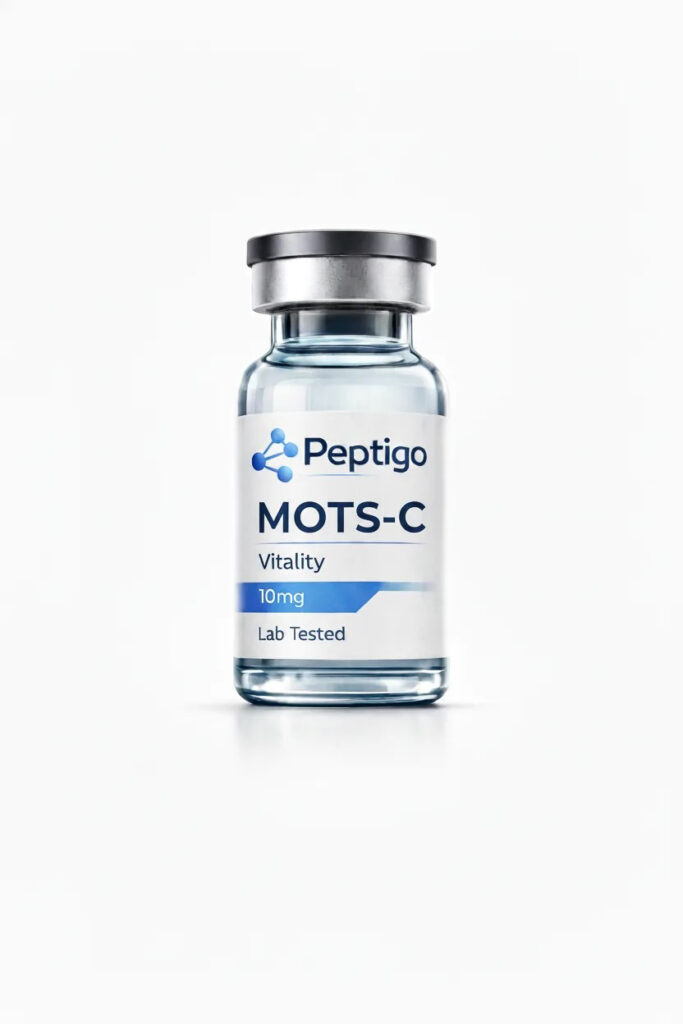
MOTS-C 10mg

MOTS-c is a peptide encoded inside a gene that was not supposed to encode peptides. The 16-residue sequence (MRWQEMGYIFYPRKLR) sits within the mitochondrial 12S rRNA gene — mitochondrial DNA, not nuclear DNA. Lee and colleagues at USC published the discovery in 2015 and established a new class of molecules: mitochondrial-derived peptides. If you remember any one thing about MOTS-c, it should be that it exists at all.

Original price was: $50.00.Current price is: $35.00.
99%+ HPLC
📚 Read the research on MOTS-c →
🚚 Free shipping over $250
Third-party HPLC tested
COA included per lot
Ships same day, Canada-wide
Interac e-Transfer accepted

🔒 Secure checkout Interac e-Transfer · no card needed

Need to reconstitute? Open the peptide calculator — dose, volume, syringe units
Details

Everything about this vial

What is this compound?
For laboratory & research use only. Not a drug, supplement, or food; not for human or animal consumption, diagnostic, or therapeutic use. No medical claims are made.
How it’s handled in research
Supplied as a lyophilized powder; reconstitute with bacteriostatic water. Use the reconstitution calculator for volume per concentration.
Storage & stability
Store at −20°C, desiccated, away from light. Refrigerate after reconstitution and use within the window appropriate to your protocol.
Shipping & payment
Same-day, Canada-wide dispatch in cold-chain packaging. Free shipping over $250. Interac e-Transfer accepted — no card needed.

Description

MOTS-c is a peptide encoded inside a gene that was not supposed to encode peptides. The 16-residue sequence (MRWQEMGYIFYPRKLR) sits within the mitochondrial 12S rRNA gene — mitochondrial DNA, not nuclear DNA. Lee and colleagues at USC published the discovery in 2015 and established a new class of molecules: mitochondrial-derived peptides. If you remember any one thing about MOTS-c, it should be that it exists at all.

Proposed Mechanism

The peptide activates AMP-activated protein kinase and modulates folate-methionine cycle metabolism, and it translocates to the nucleus under metabolic stress to modulate transcription. Lee et al. (2015, Cell Metabolism) published the discovery and initial characterization. Kim et al. (2018) extended the work to the stress-induced nuclear localization, which is the mechanism piece that connects MOTS-c to broader aging and exercise research.

Research Literature

Lee et al. (2015) is the discovery paper. Kim et al. (2018) characterized stress-induced nuclear translocation. Yen et al. (2020) reviewed the emerging mitochondrial-derived peptide literature, which has grown substantially since the 2015 MOTS-c paper. Merry et al. (2020, Aging Cell) examined MOTS-c expression changes in aging and exercise contexts. The broader significance is that MOTS-c was one of the first clear demonstrations of mitochondrial protein-coding capacity beyond the 13 canonical electron transport chain subunits.

Further reading: PubMed references for this compound.

Research Applications

Used in mitochondrial-derived peptide research, AMPK signaling assays, folate-methionine cycle metabolism studies, and exercise-physiology models. One of the first characterized MDPs, establishing the mitochondria-to-nucleus signaling paradigm.

Supplied strictly for laboratory research use. Not for human or veterinary use.

Reconstitution

Supplied as a lyophilized powder. Reconstitute with bacteriostatic water prior to use. Use the Peptigo reconstitution calculator for guidance on volume and concentration.

Storage

  • Unopened: room temperature up to 30 days during transit; refrigerate at 2-8°C long-term.
  • Reconstituted: refrigerate at 2-8°C; stable 4-6 weeks. Protect from light.

Quality Verification

Every batch is independently tested by Janoshik Analytical. Certificates of Analysis include HPLC-UV purity, LC-MS identity confirmation, LAL bacterial endotoxin quantification, and USP <71> sterility testing.

Not a drug, supplement, or cosmetic. For in vitro research use only. Not for human consumption.

Frequently Asked Questions

Is this product legal to purchase in Canada for research use?

Peptigo supplies all products strictly for laboratory and in vitro research use. The compound is not a drug, supplement, or cosmetic, and is not sold for human or veterinary use. Researchers purchasing for their own laboratory work, university research programs, or independent in vitro protocols are the intended customer base. Health Canada’s April 2026 advisory specifically addresses unauthorized injectable peptide use; the research-use framing of this product is independent of that consumer-use category.

How is purity verified, and where can I see the Certificate of Analysis?

Every batch is tested independently by Janoshik Analytical, an accredited third-party laboratory. The standard testing panel includes HPLC-UV purity verification, LC-MS identity confirmation, LAL bacterial endotoxin quantification, and USP sterility testing. The Certificate of Analysis for each batch is available on the product page after purchase, and the testing methodology is detailed on the Lab Testing reference page.

What is the standard reconstitution and storage protocol for laboratory use?

The compound is supplied as a lyophilized powder. The standard diluent for reconstitution in research protocols is bacteriostatic water (0.9% benzyl alcohol). The Peptigo reconstitution calculator handles the volume-and-concentration arithmetic for a given target research dose. Unopened lyophilized peptide is stable at room temperature for up to 30 days during transit and should be refrigerated at 2-8°C for long-term storage. Reconstituted peptide should be refrigerated at 2-8°C and is typically functional for 4-6 weeks; protect from light.

Frequently Asked Questions

What is MOTS-c?

MOTS-c is a mitochondrial-derived peptide, meaning it is encoded within mitochondrial DNA. In research it is studied for metabolic regulation and exercise-related signaling pathways in laboratory models.

MOTS-c vs SS-31, how do they differ?

Both involve mitochondria but differently. MOTS-c is a signaling peptide studied for metabolism, while SS-31 is studied for stabilizing the mitochondrial membrane itself. Different mechanisms, related research area.

Is MOTS-c legal in Canada?

MOTS-c is a research-use-only material in Canada and not approved for human use. See are peptides legal in 2026.

{“@context”: “https://schema.org”, “@type”: “FAQPage”, “mainEntity”: [{“@type”: “Question”, “name”: “What is MOTS-c?”, “acceptedAnswer”: {“@type”: “Answer”, “text”: “MOTS-c is a mitochondrial-derived peptide, meaning it is encoded within mitochondrial DNA. In research it is studied for metabolic regulation and exercise-related signaling pathways in laboratory models.”}}, {“@type”: “Question”, “name”: “MOTS-c vs SS-31, how do they differ?”, “acceptedAnswer”: {“@type”: “Answer”, “text”: “Both involve mitochondria but differently. MOTS-c is a signaling peptide studied for metabolism, while SS-31 is studied for stabilizing the mitochondrial membrane itself. Different mechanisms, related research area.”}}, {“@type”: “Question”, “name”: “Is MOTS-c legal in Canada?”, “acceptedAnswer”: {“@type”: “Answer”, “text”: “MOTS-c is a research-use-only material in Canada and not approved for human use. See are peptides legal in 2026.”}}]}

Additional information

Dose

10 mg / 10 ml

SKU

LON-MOTSC

Reviews

There are no reviews yet.

Be the first to review “MOTS-C 10mg”

Review policy — please read before submitting

Our peptides are sold as Research-Use-Only under Canadian regulations. Please rate your experience with our packaging, shipping, and customer service only.

Reviews describing personal use, dosing, biological effects, or therapeutic outcomes will not be published in accordance with Health Canada guidelines. This applies to all Canadian RUO suppliers — not just Peptigo.

Your email address will not be published. Required fields are marked *

Specification

The technical sheet

Purity (HPLC)
≥ 99% HPLC
Form
Lyophilized powder
Storage
−20°C, desiccated
Use
Research Use Only