Description
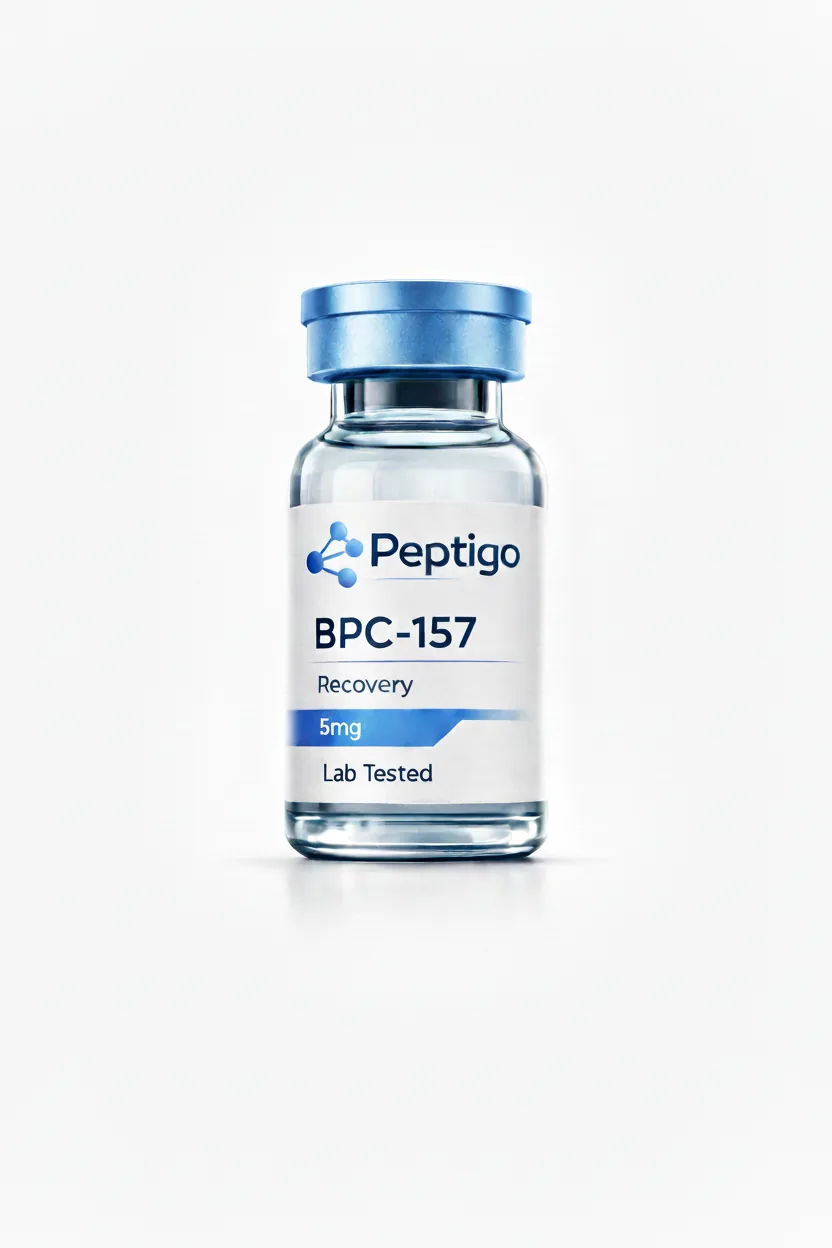
BPC-157 is one of the most-studied synthetic peptides in tendon and gut research, and one of the most misrepresented outside it. The molecule itself is simple: a 15-amino-acid fragment of a larger protein first isolated from human gastric juice. The research around it is anything but simple. Sikiric’s laboratory at the University of Zagreb has published on BPC-157 since the early 1990s, and their work is still where any serious literature review starts.
Proposed Mechanism
Three pathways recur in the published work, and they do not overlap. First, VEGF expression and angiogenesis. Brcic et al. (2009) documented VEGF upregulation in the L-NAME gastric model, the foundational paper for the angiogenic branch. Second, nitric oxide signaling through eNOS, tied closely to the first pathway through shared regulators. Third, growth hormone receptor sensitization. The GH-receptor story is the newest addition to the mechanism set, and in Sikiric et al. (2018) the authors are explicit that it still awaits meaningful independent replication. That kind of calibrated honesty about the evidence base is part of why the Zagreb group remains the standard reference across tendon, cardiac, and dermal tissue-repair contexts.
Research Literature
Most tendon researchers start with Pevec et al. (2010). They examined Achilles tendon research in rat models and reported collagen organization changes at a four-week histological endpoint. Chang et al. (2014, Journal of Applied Physiology) extended that line to the cellular level. For the gut branch, Seiwerth et al. (2014) is the standard reference. Tudor et al. (2018) covers cardiac research contexts. The through-line across all of them is that the 15-residue sequence was never isolated directly in nature. Sikiric’s group arrived at it by fragmenting the parent BPC protein from gastric juice and narrowing down to the active motif. The synthetic compound you work with in the lab is a reconstruction of that motif, not an extraction.
Further reading: PubMed references for this compound.
Research Applications
Used in tendon tissue-repair research, dermal wound-biology studies, VEGF/eNOS signaling assays, angiogenesis research, and GH-receptor sensitization models. Frequently co-administered with TB-500 in multi-pathway tissue-research protocols.
Supplied strictly for laboratory research use. Not for human or veterinary use.
Reconstitution
Supplied as a lyophilized powder. Reconstitute with bacteriostatic water prior to use. Use the Peptigo reconstitution calculator for guidance on volume and concentration.
Storage
- Unopened: room temperature up to 30 days during transit; refrigerate at 2-8°C long-term.
- Reconstituted: refrigerate at 2-8°C; stable 4-6 weeks. Protect from light.
Quality Verification
Every batch is independently tested by Janoshik Analytical. Certificates of Analysis include HPLC-UV purity, LC-MS identity confirmation, LAL bacterial endotoxin quantification, and USP <71> sterility testing.
Not a drug, supplement, or cosmetic. For in vitro research use only. Not for human consumption.
Frequently Asked Questions
Is this product legal to purchase in Canada for research use?
Peptigo supplies all products strictly for laboratory and in vitro research use. The compound is not a drug, supplement, or cosmetic, and is not sold for human or veterinary use. Researchers purchasing for their own laboratory work, university research programs, or independent in vitro protocols are the intended customer base. Health Canada’s April 2026 advisory specifically addresses unauthorized injectable peptide use; the research-use framing of this product is independent of that consumer-use category.
How is purity verified, and where can I see the Certificate of Analysis?
Every batch is tested independently by Janoshik Analytical, an accredited third-party laboratory. The standard testing panel includes HPLC-UV purity verification, LC-MS identity confirmation, LAL bacterial endotoxin quantification, and USP sterility testing. The Certificate of Analysis for each batch is available on the product page after purchase, and the testing methodology is detailed on the Lab Testing reference page.
What is the standard reconstitution and storage protocol for laboratory use?
The compound is supplied as a lyophilized powder. The standard diluent for reconstitution in research protocols is bacteriostatic water (0.9% benzyl alcohol). The Peptigo reconstitution calculator handles the volume-and-concentration arithmetic for a given target research dose. Unopened lyophilized peptide is stable at room temperature for up to 30 days during transit and should be refrigerated at 2-8°C for long-term storage. Reconstituted peptide should be refrigerated at 2-8°C and is typically functional for 4-6 weeks; protect from light.
Frequently Asked Questions
What is BPC-157?
BPC-157 is a synthetic peptide of 15 amino acids, a fragment derived from a protein found in gastric juice. In animal-model research it is studied for tissue-repair and angiogenesis-related processes. The bulk of the published data comes from a small number of research groups.
Is BPC-157 legal in Canada?
BPC-157 is sold in Canada strictly as a research material, not for human consumption; it is not an approved drug. The US FDA recently moved it through a reclassification process, which we explain (and contrast with Canada) in are peptides legal in 2026.
BPC-157 vs TB-500, which is studied for what?
BPC-157 research centers on blood-vessel formation; TB-500 research centers on cell migration. They are frequently studied together. Full comparison in BPC-157 vs TB-500.
{“@context”: “https://schema.org”, “@type”: “FAQPage”, “mainEntity”: [{“@type”: “Question”, “name”: “What is BPC-157?”, “acceptedAnswer”: {“@type”: “Answer”, “text”: “BPC-157 is a synthetic peptide of 15 amino acids, a fragment derived from a protein found in gastric juice. In animal-model research it is studied for tissue-repair and angiogenesis-related processes. The bulk of the published data comes from a small number of research groups.”}}, {“@type”: “Question”, “name”: “Is BPC-157 legal in Canada?”, “acceptedAnswer”: {“@type”: “Answer”, “text”: “BPC-157 is sold in Canada strictly as a research material, not for human consumption; it is not an approved drug. The US FDA recently moved it through a reclassification process, which we explain (and contrast with Canada) in are peptides legal in 2026.”}}, {“@type”: “Question”, “name”: “BPC-157 vs TB-500, which is studied for what?”, “acceptedAnswer”: {“@type”: “Answer”, “text”: “BPC-157 research centers on blood-vessel formation; TB-500 research centers on cell migration. They are frequently studied together. Full comparison in BPC-157 vs TB-500.”}}]}




Reviews
There are no reviews yet.