Research Use Only · Not for Human Consumption 30% OFF EVERYTHING · limited time · Free Shipping on $250+ · View Lab Reports

• Recovery & Healing

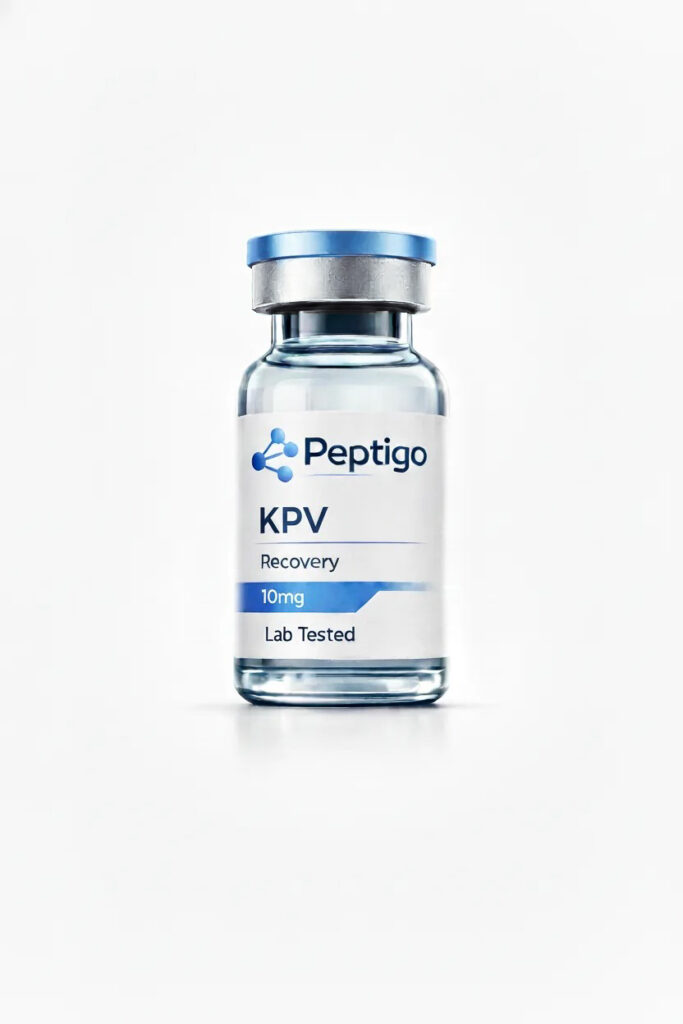
KPV 10mg

KPV is what happens when you take alpha-MSH and discard everything that binds a melanocortin receptor. What is left is three amino acids — lysine, proline, valine — from the C-terminal tail of the parent peptide. Those three residues retain the anti-inflammatory signal. The melanogenic signal is gone. That is the entire reason KPV is studied as its own compound.

Original price was: $55.00.Current price is: $38.50.
99%+ HPLC
📚 Read the research on KPV →
🚚 Free shipping over $250
Third-party HPLC tested
COA included per lot
Ships same day, Canada-wide
Interac e-Transfer accepted

🔒 Secure checkout Interac e-Transfer · no card needed

Need to reconstitute? Open the peptide calculator — dose, volume, syringe units
Details

Everything about this vial

What is this compound?
For laboratory & research use only. Not a drug, supplement, or food; not for human or animal consumption, diagnostic, or therapeutic use. No medical claims are made.
How it’s handled in research
Supplied as a lyophilized powder; reconstitute with bacteriostatic water. Use the reconstitution calculator for volume per concentration.
Storage & stability
Store at −20°C, desiccated, away from light. Refrigerate after reconstitution and use within the window appropriate to your protocol.
Shipping & payment
Same-day, Canada-wide dispatch in cold-chain packaging. Free shipping over $250. Interac e-Transfer accepted — no card needed.

Description

KPV is what happens when you take alpha-MSH and discard everything that binds a melanocortin receptor. What is left is three amino acids — lysine, proline, valine — from the C-terminal tail of the parent peptide. Those three residues retain the anti-inflammatory signal. The melanogenic signal is gone. That is the entire reason KPV is studied as its own compound.

Proposed Mechanism

The working model, worked out largely in Dalmasso’s group, is that KPV modulates NF-kB signaling in gut epithelial cells and reduces inflammatory cytokine output. Dalmasso et al. (2008) reported attenuated inflammation in murine colitis models. The mechanism is not classical receptor binding — it depends on PepT1-mediated uptake into gut epithelium, which is a distinctive feature researchers have used to design oral-delivery protocols. Kannengiesser et al. (2008) confirmed the PepT1 dependency.

Research Literature

Dalmasso et al. (2008) is the first detailed mechanistic study in colitis models and remains the reference paper. Kannengiesser et al. (2008, Inflammatory Bowel Diseases) established that PepT1-mediated uptake is required for activity in epithelial cell research models. Dalmasso and colleagues returned to the work in 2014 to examine oral-delivery formulations, testing nanoparticle-encapsulated KPV in murine protocols. The tripeptide’s minimal structure is both its advantage and its constraint — it is cheap to synthesize and stable, but the narrow mechanism also limits the questions researchers can ask with it.

Further reading: PubMed references for this compound.

Research Applications

Used in intestinal inflammation research, NF-kB signaling assays, PepT1 transporter studies, and gut-targeted oral delivery research. The tripeptide does not bind melanocortin receptors, isolating its mechanism from full alpha-MSH.

Supplied strictly for laboratory research use. Not for human or veterinary use.

Reconstitution

Supplied as a lyophilized powder. Reconstitute with bacteriostatic water prior to use. Use the Peptigo reconstitution calculator for guidance on volume and concentration.

Storage

  • Unopened: room temperature up to 30 days during transit; refrigerate at 2-8°C long-term.
  • Reconstituted: refrigerate at 2-8°C; stable 4-6 weeks. Protect from light.

Quality Verification

Every batch is independently tested by Janoshik Analytical. Certificates of Analysis include HPLC-UV purity, LC-MS identity confirmation, LAL bacterial endotoxin quantification, and USP <71> sterility testing.

Not a drug, supplement, or cosmetic. For in vitro research use only. Not for human consumption.

Frequently Asked Questions

Is this product legal to purchase in Canada for research use?

Peptigo supplies all products strictly for laboratory and in vitro research use. The compound is not a drug, supplement, or cosmetic, and is not sold for human or veterinary use. Researchers purchasing for their own laboratory work, university research programs, or independent in vitro protocols are the intended customer base. Health Canada’s April 2026 advisory specifically addresses unauthorized injectable peptide use; the research-use framing of this product is independent of that consumer-use category.

How is purity verified, and where can I see the Certificate of Analysis?

Every batch is tested independently by Janoshik Analytical, an accredited third-party laboratory. The standard testing panel includes HPLC-UV purity verification, LC-MS identity confirmation, LAL bacterial endotoxin quantification, and USP sterility testing. The Certificate of Analysis for each batch is available on the product page after purchase, and the testing methodology is detailed on the Lab Testing reference page.

What is the standard reconstitution and storage protocol for laboratory use?

The compound is supplied as a lyophilized powder. The standard diluent for reconstitution in research protocols is bacteriostatic water (0.9% benzyl alcohol). The Peptigo reconstitution calculator handles the volume-and-concentration arithmetic for a given target research dose. Unopened lyophilized peptide is stable at room temperature for up to 30 days during transit and should be refrigerated at 2-8°C for long-term storage. Reconstituted peptide should be refrigerated at 2-8°C and is typically functional for 4-6 weeks; protect from light.

Frequently Asked Questions

What is KPV?

KPV is a tripeptide (lysine-proline-valine), a fragment of the alpha-MSH hormone. In research it is studied for anti-inflammatory signaling pathways, particularly in models of gut and skin tissue.

Is KPV the same as BPC-157?

No. They are different molecules studied for different pathways. KPV research focuses on inflammatory signaling, while BPC-157 research focuses on angiogenesis and tissue repair. Some researchers study them in parallel.

Is KPV legal to buy in Canada?

KPV is offered strictly as a research-use-only material in Canada and is not approved for human use. See are peptides legal in 2026 for the regulatory context.

{“@context”: “https://schema.org”, “@type”: “FAQPage”, “mainEntity”: [{“@type”: “Question”, “name”: “What is KPV?”, “acceptedAnswer”: {“@type”: “Answer”, “text”: “KPV is a tripeptide (lysine-proline-valine), a fragment of the alpha-MSH hormone. In research it is studied for anti-inflammatory signaling pathways, particularly in models of gut and skin tissue.”}}, {“@type”: “Question”, “name”: “Is KPV the same as BPC-157?”, “acceptedAnswer”: {“@type”: “Answer”, “text”: “No. They are different molecules studied for different pathways. KPV research focuses on inflammatory signaling, while BPC-157 research focuses on angiogenesis and tissue repair. Some researchers study them in parallel.”}}, {“@type”: “Question”, “name”: “Is KPV legal to buy in Canada?”, “acceptedAnswer”: {“@type”: “Answer”, “text”: “KPV is offered strictly as a research-use-only material in Canada and is not approved for human use. See are peptides legal in 2026 for the regulatory context.”}}]}

Additional information

Dose

10 mg / 10 ml

SKU

REC-KPV

Reviews

There are no reviews yet.

Be the first to review “KPV 10mg”

Review policy — please read before submitting

Our peptides are sold as Research-Use-Only under Canadian regulations. Please rate your experience with our packaging, shipping, and customer service only.

Reviews describing personal use, dosing, biological effects, or therapeutic outcomes will not be published in accordance with Health Canada guidelines. This applies to all Canadian RUO suppliers — not just Peptigo.

Your email address will not be published. Required fields are marked *

Specification

The technical sheet

Purity (HPLC)
≥ 99% HPLC
Form
Lyophilized powder
Storage
−20°C, desiccated
Use
Research Use Only