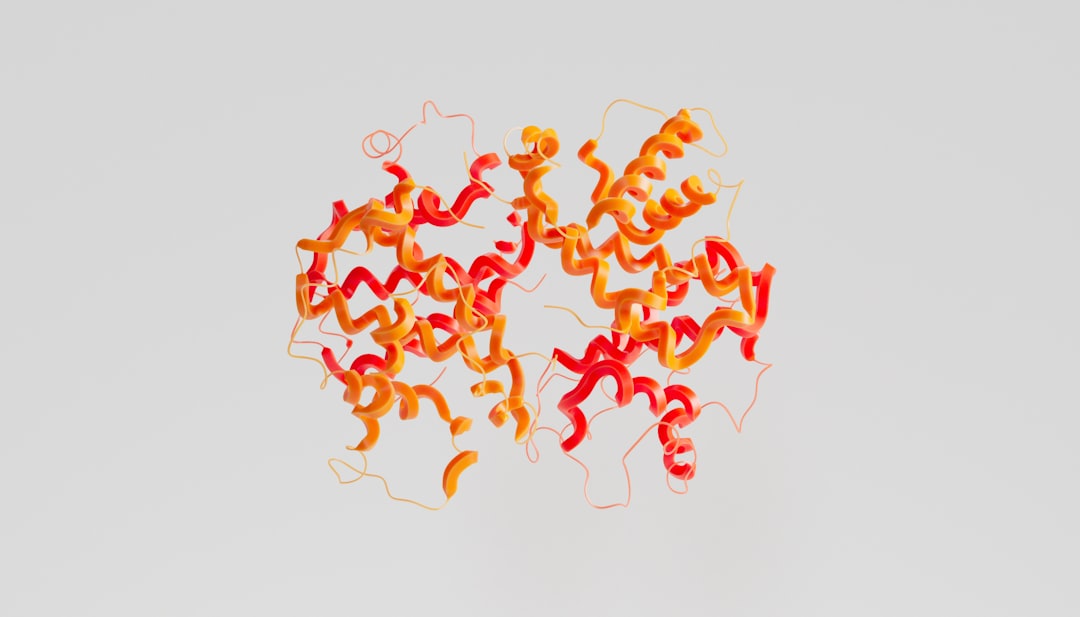
The global peptide therapeutics market is one of the fastest-growing sectors in modern science. Towards Healthcare's 2026 market analysis places the global peptide therapeutics market at $51.8 billion in 2025, growing to $54.57 billion in 2026. Inside that expanding field sits a compound that has fascinated researchers for nearly three decades: AOD 9604. It carries one of the most intriguing profiles in the peptide research space, an Australian-born fragment of human growth hormone designed to isolate fat-burning activity without the broad hormonal risks of full-length HGH. If you are evaluating this compound for research purposes, here is everything the current evidence actually supports.
This article is written for educational and research-awareness purposes only. AOD 9604 is not FDA-approved for human therapeutic use. Consult a qualified healthcare or regulatory professional before beginning any research protocol.
 Photo by
 Key Takeaways
-
Precise molecular origin: AOD 9604 is a synthetic 16-amino acid peptide fragment derived from the C-terminal domain of human growth hormone (amino acids 176-191) with a stabilizing tyrosine substitution at the N-terminus. Researchers should distinguish it from full-length HGH at every stage of protocol design.
-
Documented human trial history: Between 2001 and 2006, six human clinical trials with AOD 9604 were performed, and 893 healthy, clinically obese adults participated, forming the basis of available safety evaluation data. Therefore, any researcher reviewing the evidence base has access to a relatively substantial human dataset compared with many other research peptides.
-
Clean safety signal, modest efficacy: According to the Journal of Endocrinology and Metabolism safety review, AOD 9604 displayed a very good safety and tolerability profile indistinguishable from placebo and did not result in any of the adverse effects associated with full-length hGH treatment. The compound's clinical development was halted not due to toxicity but due to modest efficacy in the Phase 2b trial.
-
Regulatory status requires attention: The FDA moved AOD 9604 into Category 2 of its interim 503A bulk drug substances list in 2023, citing immunogenicity, impurities, and limited human clinical data. On December 4, 2024, the Pharmacy Compounding Advisory Committee reviewed AOD 9604 and voted against adding it to the 503A bulks list. Researchers working in the U.S. must account for this status.
-
Emerging secondary research areas: Potential applications of AOD 9604 have expanded beyond weight management to include joint recovery, cartilage regeneration, and metabolic health, though human data in these secondary areas remains preclinical.
Quick-Start Prioritization Framework
Use this table to identify which research angle best fits your current program. The compound's evidence base is uneven across application areas, and matching your study design to where the evidence is strongest avoids common pitfalls.
| Research Application | Evidence Level | Study Design Complexity | Time to Usable Data |
|---|---|---|---|
| Lipolysis / fat metabolism (in vitro) | Moderate, animal and human trials exist | Low, cell and rodent model work | Weeks |
| Metabolic safety profiling | Strong, 893-subject human safety dataset | Medium, requires blinded controls | Months |
| Cartilage / joint regeneration | Low-moderate, preclinical only | High, OA animal models needed | Months |
| IGF-1 / insulin interaction studies | Moderate, multiple clinical observations | Medium | Months |
| Oral vs. subcutaneous bioavailability | Low, subcutaneous PK not yet published | High, PK study needed | Long-term |
Start here if you are:
- A metabolic biology researcher: Begin with the lipolysis pathway. The beta-3 adrenergic receptor interaction is the most documented mechanistic target and the best-supported starting point.
- A regulatory or safety-focused team: The existing six-trial human safety dataset from Metabolic Pharmaceuticals is the primary resource. Review the Stier et al. 2013 safety summary before protocol design.
- A musculoskeletal researcher: Start with the osteoarthritis rabbit model data as your baseline and design preclinical replication studies before advancing to any in-human work.
What AOD 9604 Actually Is
Structure and Origin
AOD 9604 is a synthetic fragment of human growth hormone, specifically amino acids 176 through 191 of the hGH sequence, with a single modification at the N-terminus for stability. It was developed in the 1990s by researchers at Monash University in Melbourne, Australia, with one goal: isolate the fat-burning portion of growth hormone and deliver those effects without the risks that come with full hGH administration.
AOD 9604 is a synthetic single, non-glycosylated polypeptide chain containing 16 amino acids, having a molecular mass of 1815 Dalton and a molecular formula of C78H123N23O23S2. That structural precision is what makes it attractive to researchers studying targeted metabolic pathways. Where full HGH activates the entire growth hormone receptor cascade, this fragment is engineered to speak to a narrower set of biological targets.
Why It Differs from Full HGH
The result of Monash University's design is a 16-amino acid peptide that stimulates lipolysis through beta-3 adrenergic receptors on fat cells, without triggering IGF-1 elevation, insulin resistance, or the growth-promoting effects that make full HGH problematic for long-term metabolic use.
This distinction matters practically. In a research context, it means AOD 9604 studies can isolate lipolytic signaling without the confounding variable of IGF-1 pathway activation, a significant methodological advantage when the research question concerns fat metabolism specifically.
Pro Tip: When designing any AOD 9604 study, build in IGF-1 measurement as a control variable. Its consistent absence of IGF-1 elevation across trials is one of the compound's most reproducible and scientifically interesting features, and tracking it in your own data strengthens protocol integrity.
The Mechanism of Action: What the Research Shows

Beta-3 Adrenergic Receptor Activation
AOD 9604 binds to beta-3 adrenergic receptors located on adipocytes (fat cells). Activation of these receptors triggers two complementary processes: it accelerates lipolysis (the breakdown of stored triglycerides into free fatty acids for energy).
The second complementary process is anti-lipogenic. AOD 9604 reportedly operates by eliciting lipolysis and inhibiting lipogenesis, thus promoting the breakdown of fat and impeding the formation of new fat stores. Researchers examining body composition endpoints need to account for both directions of this dual action, not just the lipolytic arm.
Independent of the HGH Receptor
These effects are speculated to be achieved through oxidative pathways and may occur independently of the hGH receptor. This is a particularly interesting mechanistic finding from a receptor biology standpoint. It suggests AOD 9604's activity profile does not require, and may not involve, classical growth hormone receptor signaling, which has implications for how researchers model its downstream effects.
Insulin and Glucose Homeostasis
In all human trial data available AOD 9604 did not significantly elevate IGF-1, fasting glucose, or insulin, which distinguishes it mechanistically from exogenous HGH, though human efficacy data for meaningful fat loss remains weak. For researchers studying metabolic syndrome, diabetes adjacency, or insulin sensitivity, this preserved glucose homeostasis is a notable signal worth investigating further.
Clinical Trial History: The Evidence in Full
What the Phase II Program Produced
The clinical development of AOD 9604 produced a substantial but ultimately inconclusive efficacy record. Six human clinical trials were performed with AOD 9604, including two intravenous and two oral dosing pilot studies. Two oral Phase IIb studies with 300 and 500 obese adults were performed to assess efficacy (body mass reduction), safety, and tolerability.
A previous Phase 2 efficacy trial demonstrated a very competitive 2 kg weight loss more than placebo over a 12-week period, as well as other benefits such as improved cholesterol profile, according to BioSpace's reporting on Metabolic Pharmaceuticals' trial updates. That 2 kg advantage over placebo at 12 weeks should frame what researchers consider a realistic effect size.
Despite completing six human clinical trials involving over 900 participants, AOD 9604 failed to achieve statistical significance in its largest Phase IIb trial and development was terminated in 2007. That termination is a crucial data point. The development program was paused because the efficacy results at the tested doses were modest, not because of any safety signal. Therefore, researchers should enter the literature with realistic expectations about the magnitude of metabolic effects this compound produces in humans.
Animal Model Data
In one study, obese Zucker rats received daily oral doses of AOD 9604 for 19 days. Results indicated that rats receiving AOD 9604 experienced body weight reductions by greater than 50 percent compared with the control group. Additionally, in the adipose tissues of animals treated with AOD 9604, increased lipolytic activity was noted. Compared to chronic hGH treatment, AOD 9604 demonstrated no negative effects on insulin sensitivity, according to Weight Loss and Vitality's clinical review. Researchers should note the meaningful translation gap between rodent and human results, the 50% body weight reduction in obese rats did not replicate at that magnitude in human trials.
Pro Tip: Always report the animal model used when citing AOD 9604 preclinical data. Results in obese Zucker rats and ob/ob mice can diverge considerably from lean models, and that distinction changes the interpretive weight of the data significantly.
Emerging Research Areas Beyond Fat Metabolism
Joint Health and Cartilage Regeneration
Preclinical evidence shows AOD 9604 can stimulate chondrocyte differentiation and increase proteoglycan synthesis, which are both important steps in cartilage formation, according to FormBlends' joint pain research guide. This line of investigation is drawing increasing attention from musculoskeletal researchers.
In a collagenase-induced knee osteoarthritis rabbit model, weekly intra-articular injections of AOD 9604 (0.25 mg), with or without hyaluronic acid, enhanced cartilage regeneration compared with saline controls. The combination of AOD 9604 and HA produced more pronounced improvements in histologic cartilage scores than either agent alone. If your research program involves OA modeling, this combinatorial angle represents an underexplored protocol opportunity.
Whether this translates to clinically meaningful cartilage regeneration in humans requires further study. The peptide may be most effective at supporting cartilage maintenance and slowing degradation rather than fully regrowing lost tissue. Any research framing should reflect that honest limitation.
Matrix Biology and Tissue Regeneration
A recent overview article summarizing AOD 9604 research notes that in isolated chondrocyte cultures, AOD 9604 has been reported to promote proteoglycan and collagen production, and may influence differentiation of adipose-derived mesenchymal stem cells toward osteogenic lineages, according to G-Lab Peptides' research summary. This positions AOD 9604 as a potential tool in studying cartilage and bone matrix biology, quite separate from its original obesity-focused development context.

Regulatory Status and Researcher Obligations in 2026
FDA Classification
The FDA moved AOD 9604 into Category 2 of its interim 503A bulk drug substances list in 2023, citing immunogenicity, impurities, and limited human clinical data. On December 4, 2024, the Pharmacy Compounding Advisory Committee reviewed AOD 9604 free base and AOD 9604 acetate and voted against adding either to the 503A bulks list. The practical consequence is that licensed compounding pharmacies cannot legally prepare it for patients under U.S. regulations as of 2026.
Its sale for human use as an injectable compound exists in a regulatory gray zone that has been subject to increasing FDA scrutiny of the research chemical and compounding pharmacy sectors. Regulatory status can change; verify current status through FDA.gov and your jurisdiction's pharmacy board before sourcing, as FormBlends' regulatory review notes.
WADA Prohibition
AOD 9604 is prohibited in sport at all times. The WADA Prohibited List, section S2.2, names "Growth Hormone fragments, e.g. AOD-9604 and hGH 176-191." Section S2 substances are banned in competition and out of competition, year round. Any institution conducting research that involves competitive athletes must factor this prohibition into its ethical review and participant eligibility criteria.
Pro Tip: Before sourcing any research-grade AOD 9604, request a Certificate of Analysis (COA) confirming HPLC purity and third-party identity verification. For research-only compounds, the key issue is not just whether a mechanism sounds plausible. Identity, purity, sterility, dose accuracy, route, and human safety data all matter, and vendor vials are not equivalent to FDA-approved medications.
Handling, Storage, and Reconstitution for Research Use
Lyophilized Storage Requirements
Lyophilized AOD 9604, although stable at room temperature for 3 weeks, should be stored desiccated below -18°C. Upon reconstitution, AOD 9604 should be stored at 4°C between 2-7 days and for future use below -18°C. For longer research protocols, aliquot the reconstituted stock into single-use volumes appropriate for your experimental needs (e.g., 100-500 µL per tube), place immediately on ice, then transfer to storage at -20°C.
Reconstitution Protocol
A standard 5 mg vial reconstituted in 2 mL bacteriostatic water yields 2500 mcg/mL; a 250 mcg dose equals exactly 10 units on a U-100 insulin syringe. This calculation is a foundational point for any protocol document. Errors in reconstitution, such as using the wrong solvent, applying excessive heat or agitation, or miscalculating concentration, can compromise the compound's integrity and produce unreliable experimental results, as Palmetto Peptides' reconstitution guide notes. Precision at this step directly protects the validity of downstream data.
Do not refreeze reconstituted solution, freeze-thaw cycles degrade peptide integrity. Allow refrigerated vials to reach room temperature before opening to minimize condensation uptake. Always inspect for cloudiness or particulates before use, discard if present.
Documented Dosing Ranges from Clinical Trials
For researchers contextualizing their protocols against prior human studies: the dose used in human clinical trials by Metabolic Pharmaceuticals was 1 mg (1000 mcg) per day orally. Subcutaneous injection protocols in research settings have used 250-500 mcg per day, typically administered once daily in a fasted state. No published human RCT has validated subcutaneous dose-ranging specifically, according to FormBlends' dosage guide, a gap that represents a legitimate research opportunity.
Researchers interested in sourcing well-characterized AOD 9604 for controlled laboratory studies may find it useful to review what suppliers like Peptigo offer in terms of documented purity standards, lot traceability, and third-party testing documentation, factors that matter far more than price when data reproducibility is the goal.
Safety Profile: What the Clinical Record Reveals
Not a single serious adverse event was attributed to AOD 9604 administration across the entire trial program. This finding is particularly noteworthy given that some trials extended to 24 weeks of continuous exposure and included participants with obesity-related comorbidities who might be expected to have higher baseline health risks.
The most commonly reported adverse effects were mild to moderate headache and gastrointestinal symptoms including diarrhea, flatulence, nausea, and increased appetite. Importantly, these effects occurred at rates similar to placebo groups, suggesting that many cases represented background occurrence rather than treatment-specific effects.
Unlike full-length hGH, AOD 9604 does not cause fluid retention, carpal tunnel syndrome, or insulin resistance at studied doses. That said, long-term safety data beyond 12 weeks does not exist, nearly all published trials ran 12 weeks or less. Researchers designing chronic exposure studies should treat that gap as a meaningful unknown and build appropriate monitoring into the protocol.
Frequently Asked Questions
What is AOD 9604 and how does it differ from HGH?
AOD 9604 is a synthetic fragment of human growth hormone (amino acids 176-191) developed to isolate the fat-burning properties of HGH without triggering IGF-1 elevation or insulin resistance. Where full-length HGH activates the entire growth hormone receptor cascade and carries risks including glucose intolerance and tissue overgrowth, AOD 9604 targets a narrower set of adipose tissue pathways. Researchers value this specificity for metabolic studies that require clean signal isolation.
What does the human clinical evidence actually show?
The evidence base is mixed. Six randomized, double-blind, placebo-controlled trials were conducted between 2001 and 2006 in nearly 900 participants, establishing a favorable safety profile. In a 12-week randomized clinical trial trial, subjects receiving AOD 9604 (1 mg/d) lost an average of 2.6 kg, compared to 0.8 kg in the placebo group. The Phase 2b trial, however, failed to achieve statistical significance at the primary efficacy endpoint, which is why commercial development halted. Therefore, researchers should size expectations around effect magnitude carefully.
Is AOD 9604 legally available for research in the United States?
AOD 9604 is not FDA-approved. It is not available as an investigational new drug through any active U.S. clinical trial registered on ClinicalTrials.gov. Its current Category 2 classification restricts compounding pharmacy preparation. Research use of the compound as a laboratory reference material exists in a separate regulatory category from clinical administration, institutions should consult their IRB and legal counsel before any protocol involving human subjects.
What are the most important handling precautions for laboratory researchers?
Purity documentation and proper storage are the two most critical factors. Label each vial immediately after reconstitution with the total volume, calculated concentration, and date. Do not trust memory once multiple vials are in cold storage. Freeze-thaw cycling degrades peptide integrity and undermines data reproducibility. Source material with a lot-matched Certificate of Analysis from suppliers with documented third-party HPLC verification.
What are the most promising secondary research directions for AOD 9604 in 2026?
Its potential applications are expanding beyond weight management to include treating metabolic conditions like type 2 diabetes and non-alcoholic fatty liver disease (NAFLD), as well as supporting joint health and cartilage regeneration. The joint health angle is particularly underexplored in human models, the existing data sits almost entirely at the preclinical level, making it a high-potential area for researchers willing to design rigorous translational studies.
Sources
-
Safety and Tolerability of the Hexadecapeptide AOD9604 in Humans, Stier et al., Journal of Endocrinology and Metabolism (2013). Peer-reviewed safety summary of six clinical trials. https://www.jofem.org/index.php/jofem/article/view/157/194
-
Peptide Therapeutics Market Sizing 2026, Towards Healthcare. Market valuation and CAGR data. https://www.towardshealthcare.com/insights/peptide-therapeutics-market-sizing
-
AOD 9604 Peptide: The Fat-Burning HGH Fragment and What the Research Shows, Perfect B Clinical. Mechanism and clinical overview. https://www.perfectb.com/aod-9604-peptide-hgh-fragment-fat-loss/
-
AOD-9604 Peptide Science Library, Paragon Sports Medicine. Regulatory status and mechanism summary. https://www.paragonsportsmedicine.com/peptides/aod-9604
-
AOD 9604 for Weight Loss: What the Research Supports, FormBlends. Clinical trial analysis. https://formblends.com/articles/peptide-hub/aod-9604-for-weight-loss
-
AOD 9604 Dosage: Chart, Reconstitution and Protocol Guide, FormBlends. Dosing and reconstitution reference. https://formblends.com/articles/peptide-hub/peptides-aod-9604-dosage
-
AOD 9604 Peptide Research: Lipolysis, Cell Regeneration, and Cancer, CorePeptides. Mechanism and research context. https://www.corepeptides.com/aod-9604-peptide-research-in-lipolysis-cell-regeneration-and-cancer/
-
Metabolic Pharmaceuticals Phase 2B Trial Update, BioSpace. Clinical development history. https://www.biospace.com/metabolic-pharmaceuticals-s-obesity-trial-update-first-100-subjects-complete-the-phase-2b-trial-of-aod9604
-
How AOD 9604 Supports Fat Metabolism, Weight Loss and Vitality. Animal and human study review. https://www.weightlossandvitality.com/blog/how-aod-9604-supports-fat-metabolism
-
AOD 9604 for Joint Pain: How This Peptide May Support Cartilage, FormBlends. Preclinical cartilage research. https://formblends.com/articles/peptide-hub/aod-9604-for-joint-pain-complete-guide
-
AOD-9604: Research, Status and Evidence, Superpower. FDA and WADA regulatory status. https://superpower.com/guides/peptides/aod-9604
-
AOD 9604 Peptide for Sale: Regulatory Review, FormBlends. Regulatory and sourcing guidance. https://formblends.com/articles/peptide-hub/peptides-aod-9604-buy-review
-
Is AOD 9604 FDA Approved? The Full Regulatory History, PeRx. Regulatory timeline. https://www.perxpeptides.com/blog/is-aod-9604-fda-approved
-
AOD-9604 Side Effects: What the Clinical Trial Data Actually Showed, AOD9604Peptide.com. Adverse event analysis. https://aod9604peptide.com/aod-9604-side-effects/
-
Step-by-Step Reconstitution Protocols for AOD-9604, Palmetto Peptides. Laboratory handling guide. https://palmettopeptides.com/blogs/news/step-by-step-reconstitution-protocols-for-aod-9604-in-laboratory-research
-
AOD 9604 Peptide Evidence, PeptidesExplorer. Regulatory classification detail. https://peptidesexplorer.com/blog/aod-9604-peptide
-
AOD 9604 Safety Profile: What Clinical Trials Show, Beverly Hills Rejuvenation Center. Clinical safety data. https://www.bhrcenter.com/aod-9604-safety-profile-what-clinical-trials-show/
-
AOD-9604 FDA Approval History, HealthRX. Regulatory and approval timeline. https://healthrx.com/regulatory-aod-9604/fda-approval-history